

Our technology

SymphNode: a synthetic lymph node

A biodegradable, porous biomaterial that creates a localized environment for immune-cell recruitment, activation, and expansion — programming antitumor immunity directly inside the patient.

At a glance

The SymphNode solution

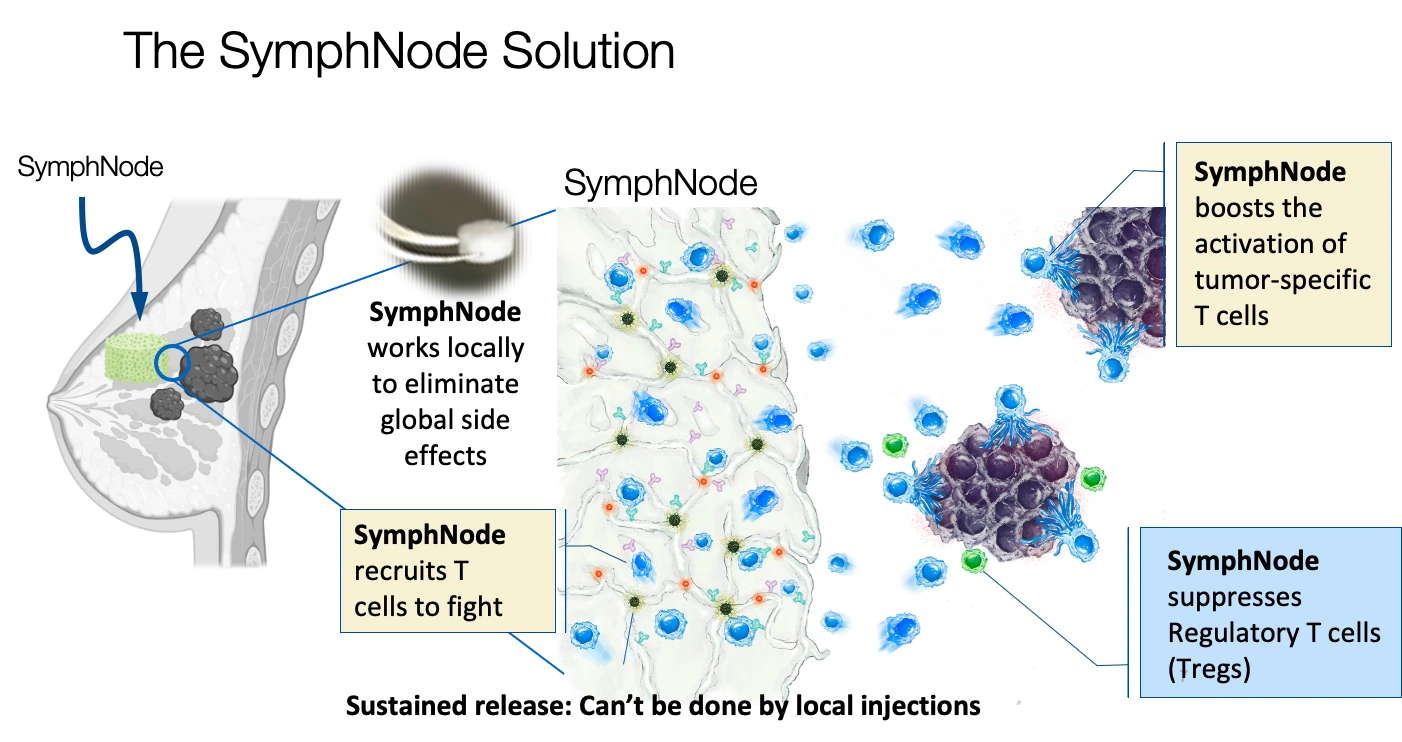
Implanted beside the tumor, SymphNode acts locally — recruiting T cells, boosting the activation of tumor-specific T cells, and suppressing regulatory T cells (Tregs) through sustained release of immunomodulatory agents.

Diagram: SymphNode, a small porous implant shown next to a photo of the device, is placed beside a breast tumor. A magnified view shows the scaffold recruiting T cells to fight, boosting activation of tumor-specific T cells that attack tumor cells, and suppressing regulatory T cells. It works locally to limit systemic side effects, through sustained release that local injections can’t provide.
  • Recruits T cells

    Draws the patient’s own T cells into the scaffold to fight the tumor.

  • Boosts activation

    Enhances the activation of tumor-specific T cells.

  • Suppresses Tregs

    Counters regulatory T cells that shield tumors from immune attack.

Mechanism of action

How SymphNode is designed to work

Three steps, from placement beside the tumor to an antitumor immune response.

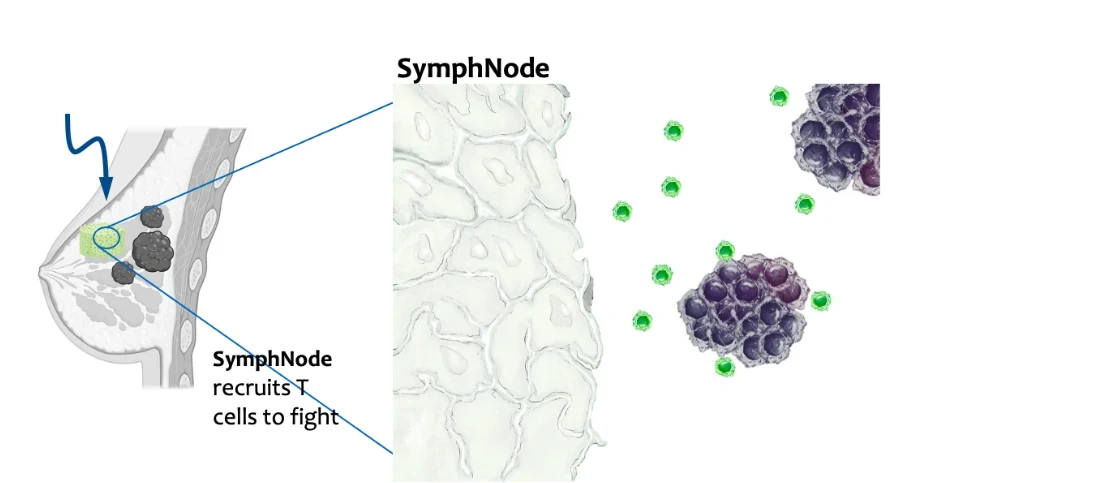
Step 1 diagram: SymphNode is implanted beside a breast tumor. A magnified view shows the empty porous scaffold next to tumor cells surrounded by regulatory T cells.
Step 1

Placement beside the tumor

SymphNode is implanted next to a solid tumor — potentially at the time of biopsy or surgical removal, fitting into procedures patients may already undergo.

Its porous, biodegradable structure gives immune cells a three-dimensional space to enter. Around the tumor, regulatory T cells (Tregs) keep the immune system from attacking.
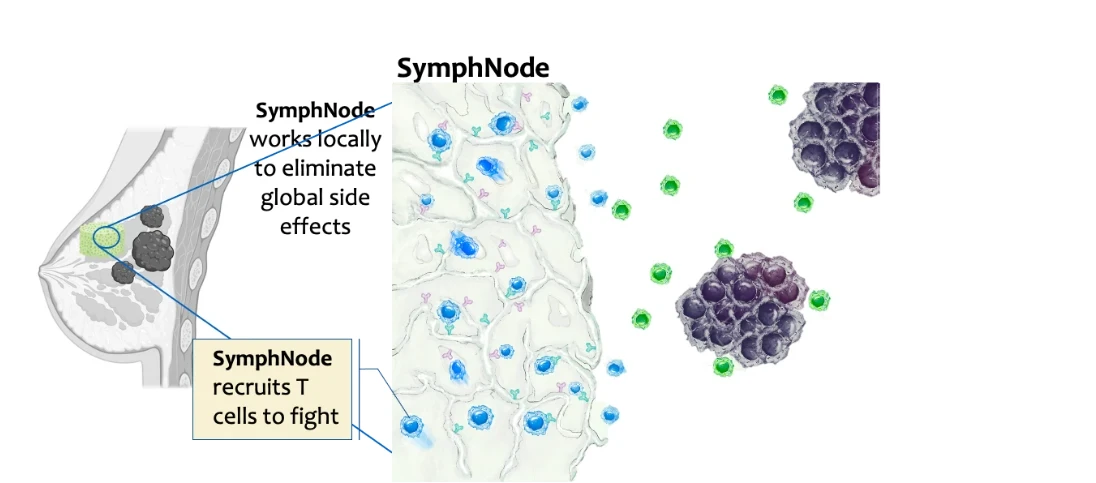
Step 2 diagram: the patient's T cells move into the SymphNode scaffold, which works locally beside the tumor.
Step 2

Recruiting T cells

Through sustained release of immunomodulatory agents, SymphNode recruits the patient’s own T cells into the scaffold.

Because it works locally, it’s designed to limit the systemic side effects of body-wide immunotherapy. No cells are removed or engineered outside the body.

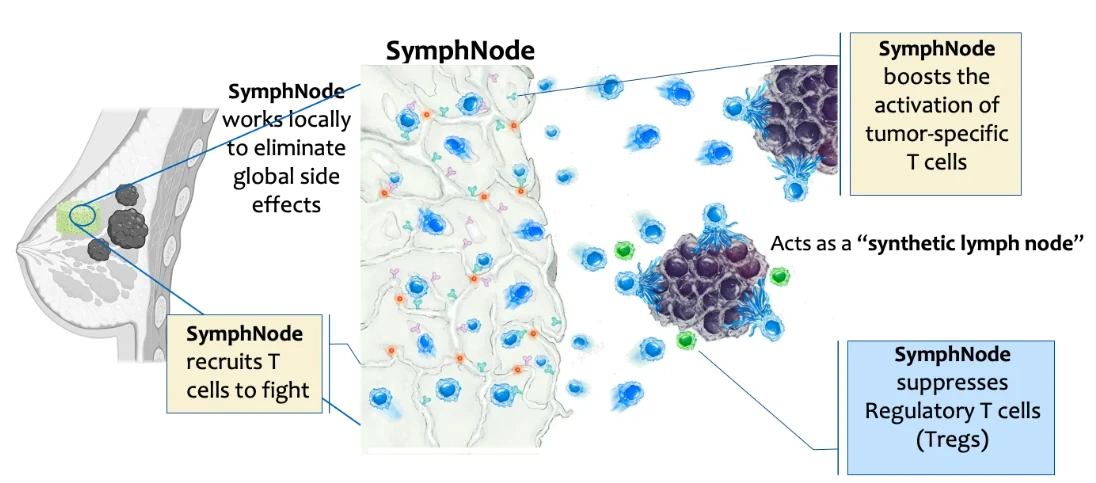
Step 3 diagram: acting as a synthetic lymph node, SymphNode boosts the activation of tumor-specific T cells, which swarm and attack the tumors, while regulatory T cells are suppressed.
Step 3

Activation and antitumor attack

Acting as a synthetic lymph node, SymphNode boosts the activation of tumor-specific T cells, which leave the scaffold to attack the tumor.

At the same time, it suppresses regulatory T cells that shield the tumor. The goal is durable, systemic antitumor immunity that also targets residual cancer cells and limits recurrence or metastasis.

What makes it different

Engineering the environment, not the cell

Conventional approaches rely on systemic drugs or complex manipulation of immune cells outside the body. SymphNode works with the body’s existing immune cells.

  • No patient-specific manufacturing. Designed to work without harvesting and engineering each patient’s cells.
  • Localized activity. Immune signals delivered at the treatment site to reduce unnecessary systemic exposure.
  • Sustained local release. Immunomodulatory agents are released over time at the tumor site — something local injections can’t achieve.
  • Several barriers at once. Recruitment, activation, and relief of suppression in a single platform.
  • Biodegradable. The scaffold is designed to break down after it has done its job.

Explore the science behind SymphNode

The immunology and engineering principles that guide our platform.