
Our science

At the intersection of biomaterials, immunology, and engineering

We engineer the local environment where immune responses are initiated and regulated — so the body’s own immune system can do what it does best.

The problem

Why solid tumors resist immunotherapy

Despite major advances in cancer immunotherapy, existing approaches face several important challenges.

  1. Insufficient T-cell activation

    Tumor-reactive T cells are not activated or expanded in sufficient numbers.

  2. Immunosuppressive microenvironments

    Tumors surround themselves with inhibitory signals and regulatory cells that limit immune-cell effectiveness.

  3. Poor infiltration and persistence

    Immune cells struggle to enter solid tumors and to remain active once there.

  4. Systemic toxicity

    Broadly distributed immunomodulatory drugs can cause significant side effects throughout the body.

  5. Manufacturing complexity

    Personalized cellular immunotherapies require complex, expensive, patient-by-patient manufacturing.

The lymph node is where the body trains its immune defenses. We set out to build one where it’s needed most.

Core capabilities

Three capabilities, one platform

Biomaterial engineering

We design biocompatible, biodegradable scaffolds that provide a three-dimensional microenvironment for immune-cell recruitment and activation.

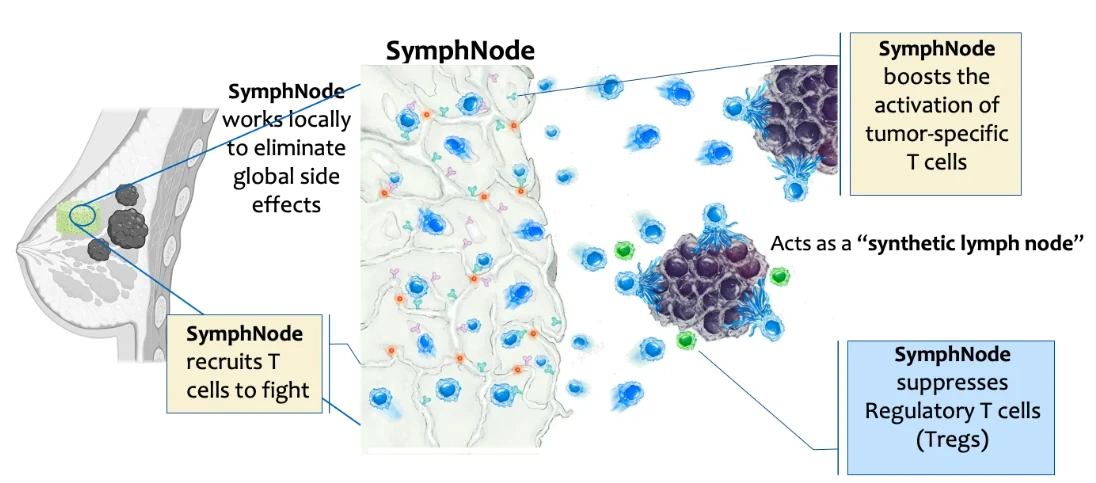
Porosity, degradation, and release properties are engineered so the scaffold behaves like a synthetic lymph node — an organizing hub for immune activity.
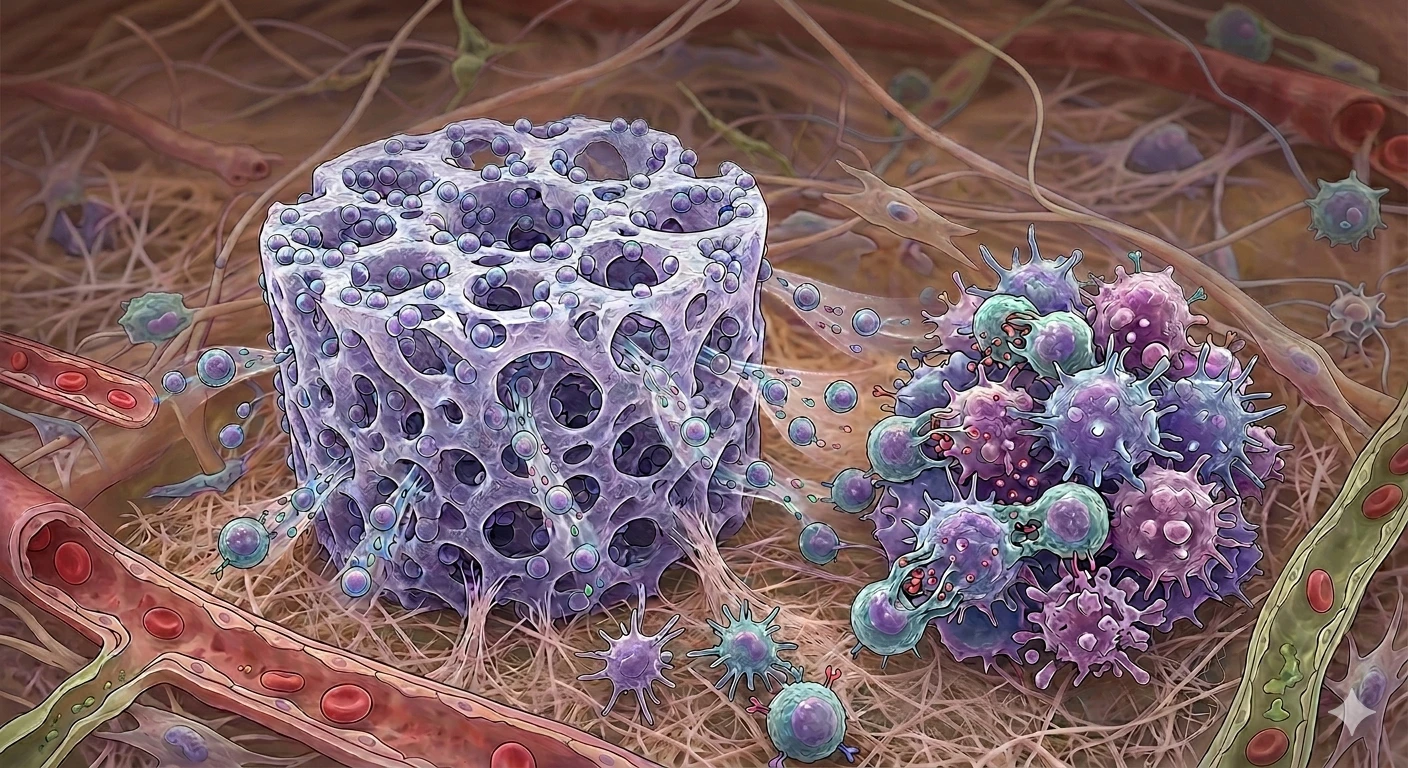
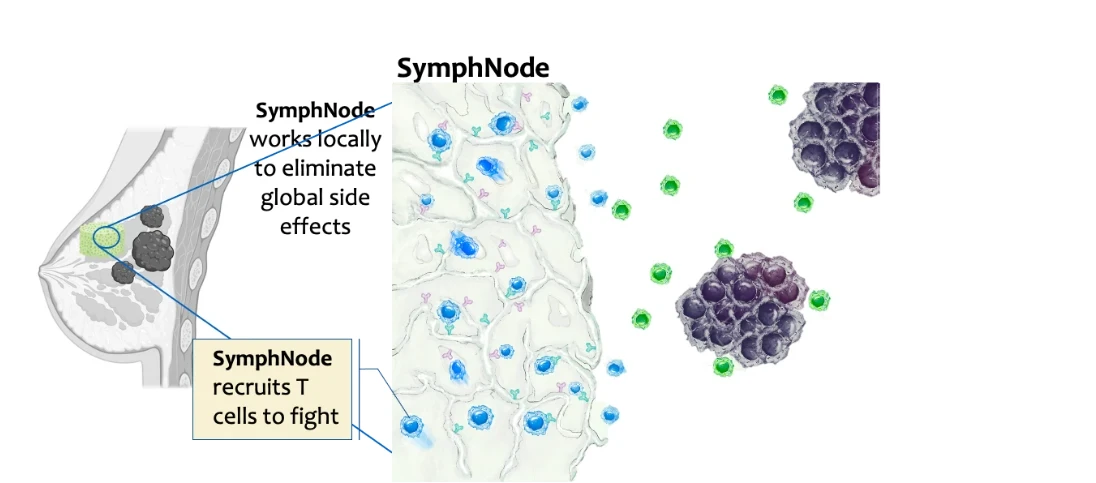
Illustration of the porous SymphNode scaffold in tissue with immune cells moving toward a tumor.

Localized immunomodulation

We deliver immune-activating and immune-regulating agents directly to the intended treatment site.

Local delivery aims to maximize activity where it matters while reducing unnecessary systemic exposure — including agents that counter regulatory T-cell-mediated suppression.

Diagram: SymphNode works locally beside the tumor, recruiting T cells into the scaffold.

In situ immune programming

We harness the body’s endogenous immune cells and guide their behavior within an engineered environment to generate stronger antitumor responses.

Because programming happens inside the patient, the approach avoids the need to extract, modify, and reinfuse cells.

Diagram: activated tumor-specific T cells attack the tumor while regulatory T cells are suppressed.
Therapeutic focus

Starting with hard-to-treat solid tumors

We are initially focused on solid tumors, including challenging cancers such as triple-negative breast cancer and melanoma.

Longer term, we aim to build a versatile biomaterial-based immunotherapy platform that could support multiple cancer indications and complement other immune-based treatments.

See the pipeline
Key publication · Nature Biomedical Engineering

Systemic enhancement of antitumour immunity by peritumourally implanted immunomodulatory macroporous scaffolds

Majedi FS, Hasani-Sadrabadi MM, Thauland TJ, Keswani SG, Li S, Bouchard L-S, Butte MJ. Nature Biomedical Engineering 7, 56–71 (2023).

Read the paper